

A Critical Reflection on the Values and Assumptions in Data Visualization
Abstract
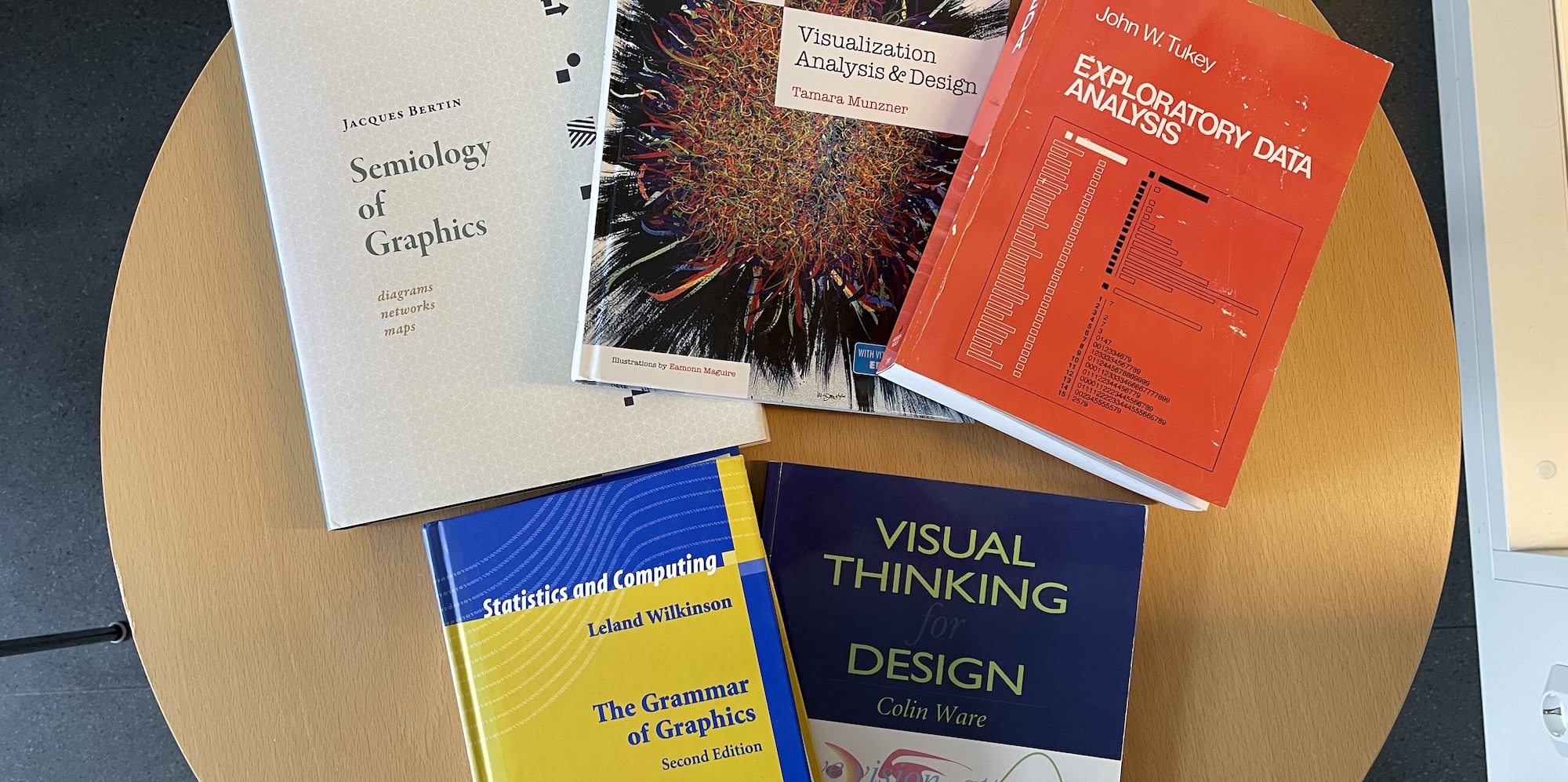
Visualization has matured into an established research field, producing widely adopted tools, design frameworks, and empirical foundations. As the field has grown, ideas from outside computer science have increasingly entered visualization discourse, questioning the fundamental values and assumptions on which visualization research stands. In this short position paper, we examine a set of values that we see underlying the seminal works of Jacques Bertin, John Tukey, Leland Wilkinson, Colin Ware, and Tamara Munzner. We articulate three prominent values in these texts - universality, objectivity, and efficiency - and examine how these values permeate visualization tools, curricula, and research practices. We situate these values within a broader set of critiques that call for more diverse priorities and viewpoints. By articulating these tensions, we call for our community to embrace a more pluralistic range of values to shape our future visualization tools and guidelines.
Citation
Shehryar Saharan, Ibrahim Al-Hazwani, Miriah Meyer, Laura Garrison. A Critical Reflection on the Values and Assumptions in Data Visualization. SIGCHI Conference on Human Factors in Computing Systems (CHI) , pp. 1-8 , doi:10.1145/3772318.3791501 , 2026.
Acknowledgements
This work is partially funded by the National Science Foundation (OAC 1835904), and by the Wallenberg AI, Autonomous Systems and Software Program (WASP) funded by the Knut and Alice Wallenberg Foundation.